
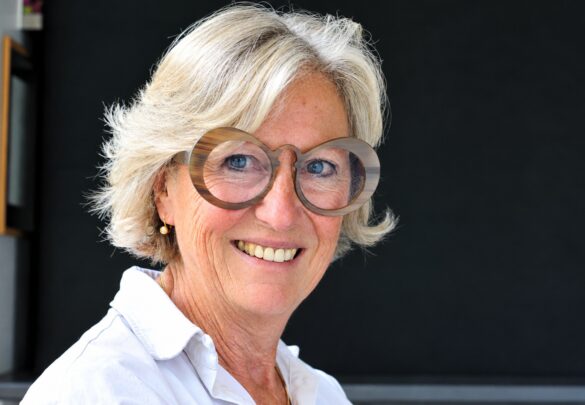
Ineke Reisiger (assistant teacher)
“Most people do not listen with the intent to understand; they listen with the intent to reply.” – Steven Covey
What inspires you to be an assistant teacher?
Teaching is in my blood; ever since I was a child, I’ve wanted to be a teacher. For me, teaching means offering and passing on something I find valuable, and guiding others on an equal footing, as a peer. You are no more, but also no less, than the client. From that position, you support the client in his further development.
I wish everyone could experience this personal growth, to discover their pitfalls and learn how to deal with them. And what could be better than helping to train coaches and enabling them to support their clients in that development?
During my own training at the ACC, my lecturers were a great source of inspiration. They helped me to apply theory and methodologies and to develop my own coaching style. Their positive feedback really gave me a boost. But just as important was the respectful, open and warm way in which they pointed out my own blind spots and areas for improvement.
I am grateful that, in this role, I can now contribute to the students’ development and discoveries, so that their dream of becoming a coach can become a reality.
About me
I grew up in Germany with a German mother and a Dutch father. After studying French and Theology, I worked for many years as a freelance language teacher and translator. My keen interest in people, human development, human behaviour and human history was confined to reading literature in my spare time. When my work began to change due to technological developments, I enlisted the help of a career coach to help me find a new direction. It soon became clear that coaching would suit me well.
I am also a qualified felt artist. The combination of coaching and creative work strikes me as a wonderful way of working. I am convinced that working with your hands, the meditative motion of working with wool and the creative process can help people to organise their feelings, thoughts and questions, to reflect and to solve problems.
Why have you chosen the ACC and what did the training bring you?
I was looking for a thorough training. That’s why I didn’t opt for a course lasting just a few months, but for one that gave me enough time for my learning process. The combination of scientifically grounded literature, a wide range of methodologies, extensive self-exploration and plenty of opportunities to practise on every class day really appealed to me. Thanks to the small number of students, a pleasant and safe study group developed very quickly. I see this openness and sense of security as essential conditions for every participant’s process of learning and discovery.
Self-reflection, discussions with my fellow students and the lecturers soon led to changes in my daily life. My relationships with other people have become even more meaningful and deeper as a result of listening more carefully, observing without judgement and asking different questions.
The highly competent lecturers at the ACC were essential to me. With their in-depth knowledge and extensive practical experience, they delivered the training programme in an inspiring way.
Who is my hero and why?
I don’t have just one hero. For me, there are lots of inspiring people, all of whom have given me so much in their own way. These include family members, such as my parents, a teacher from school and friends, but also people I don’t know – people who have written a book, composed music or created a work of art that has moved me.
If I had to name just one person, it would be my mum. She gave me strength and self-belief during a difficult time, so that I could carry on. She said something very simple to me: “Take it step by step, millimetre by millimetre.” Change doesn’t come from big things; it’s much more effective and sustainable if you think and act in small, manageable steps. I think that, as a coach, I’d like to pass on this wise saying.